





Furnace Maintenance Tips for Homeowners in Durham
Furnace Maintenance Tips for Homeowners in Durham: Complete Checklist and Expert Advice

A well-maintained furnace keeps your Durham home safe, comfortable, and energy-efficient during chilly months, and regular care prevents common failures that lead to emergency repairs. This guide explains what furnace maintenance covers, why Durham homeowners should prioritize seasonal tune-ups, and how simple DIY steps combine with professional inspections to maximize safety and lifespan. You will find a clear checklist for routine tasks, step-by-step instructions for changing filters and inspecting vents, warning signs that require expert attention, and a comparison of gas versus electric furnace care. The article also walks through what a professional tune-up checks, how furnace maintenance plans work, and practical timing for service so you can plan fall readiness. Throughout the guide we use local context— Durham’s seasonal patterns and common system issues—to help homeowners take the right preventative steps and know when to call for service.
Why Is Regular Furnace Maintenance Essential for Durham Homeowners?
Regular furnace maintenance is the routine care that keeps the heating system operating safely, efficiently, and reliably by addressing combustion, airflow, and control-system issues before they become failures. By inspecting and servicing key components—filters, burners, heat exchangers, blower motors, and thermostats—maintenance reduces carbon monoxide risks, improves energy efficiency, and extends equipment life. For Durham homeowners, seasonal swings and occasional cold snaps make pre-season checks particularly important to avoid midwinter breakdowns and to maintain even heating across multiple rooms. The next paragraphs list the primary benefits of scheduled care and show how those benefits translate to everyday household outcomes.
Furnace maintenance delivers three core homeowner benefits that are immediate and long-term:
- Improved Safety: Regular combustion and carbon monoxide checks reduce the risk of hazardous leaks and electrical faults.
- Higher Efficiency: Clean filters and calibrated thermostats reduce run time and improve heat transfer.
- Longer Equipment Life: Proactive inspections prevent small issues from becoming expensive failures.
These benefits combine to create predictable comfort and lower surprise repair incidents, which sets up the practical DIY and professional actions discussed next.
How Does Furnace Maintenance Improve Energy Efficiency and Safety?
Furnace maintenance improves energy efficiency by restoring proper airflow and optimal combustion, which reduces the amount of fuel or electricity required to maintain set temperatures. Clean air filters and unobstructed vents allow the blower motor to move air with less effort, while tuned burners and a verified heat exchanger maximize heat transfer so the system runs shorter, reducing energy consumption. Safety improves when technicians test safety controls and carbon monoxide detection, because these checks detect combustion anomalies and venting problems that can otherwise produce dangerous gases. Understanding these mechanisms clarifies why routine tasks such as filter replacement and combustion testing are central to both savings and household safety.
Routine efficiency and safety checks also reveal early wear patterns—such as reduced burner flame quality or motor amperage drift—which inform repairs before failure. Spotting those trends helps homeowners plan maintenance and avoid emergency calls during cold spells, and it ties directly into the checklist and professional services described in later sections.
What Are the Common Furnace Issues in Durham’s Climate?
Durham’s seasonal humidity and temperature swings commonly produce issues like clogged filters from pollen and dust, short-cycling during mild transitions, and ignition or pilot failures after prolonged off-seasons. Homeowners often notice uneven heating, increased cycling, or rising energy bills as early signs, and these symptoms typically stem from restricted airflow, thermostat miscalibration, or failing blower motors. Local examples include systems that struggle during late-fall cold snaps when dust and debris accumulated over summer cause inefficient combustion and reduced airflow. When symptoms persist after basic DIY checks, a professional inspection is the logical next step to diagnose combustion or heat-exchanger problems.
Addressing these common issues through seasonal maintenance reduces emergency service needs and improves winter comfort, which leads naturally into practical DIY tasks homeowners can safely perform between professional visits.
What Are the Best DIY Furnace Maintenance Tips for Homeowners in Durham?
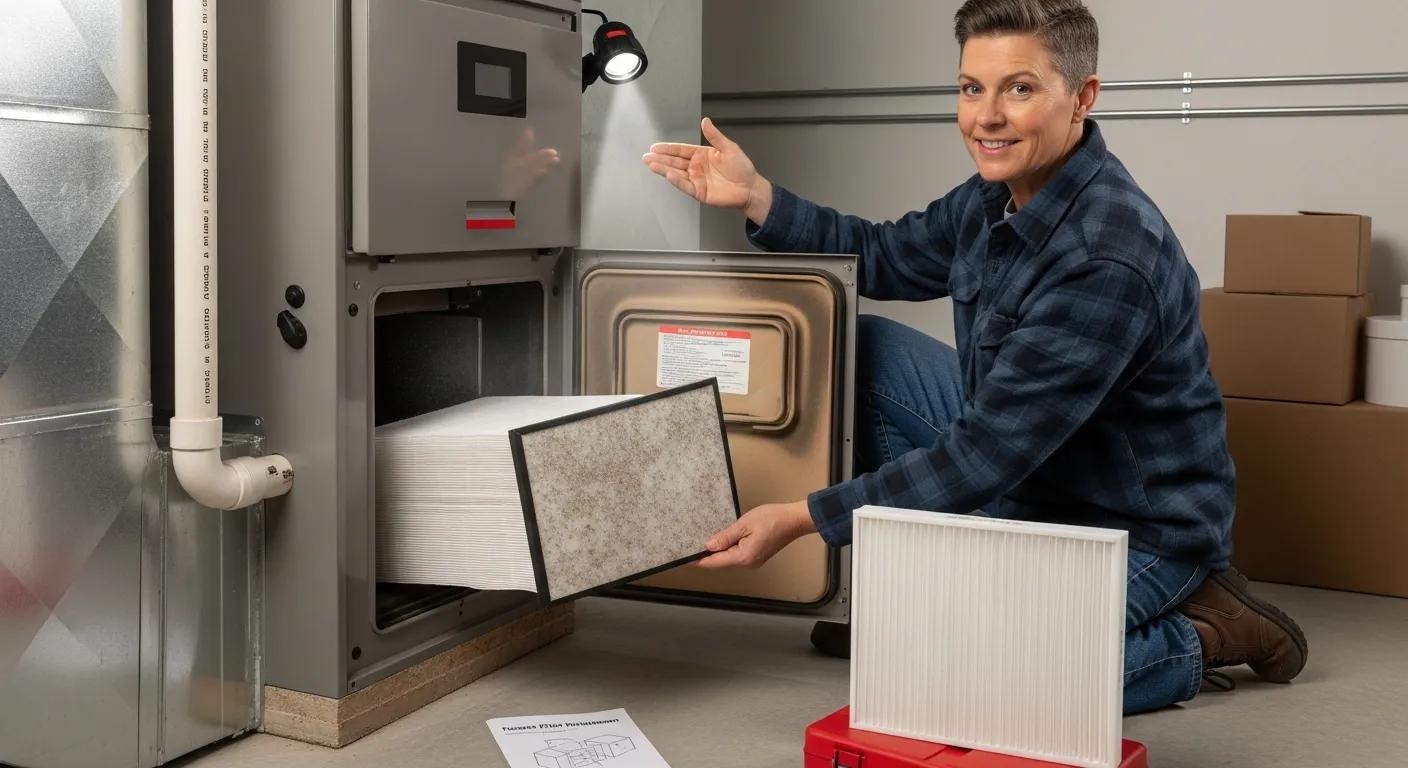
DIY furnace maintenance includes safe, repeatable tasks homeowners can perform to keep systems running well between professional tune-ups: changing filters, clearing furnishing and storage away from the furnace area, inspecting vents and registers, and checking thermostat settings and batteries. These tasks improve airflow, reduce dust accumulation, and ensure control systems are responding correctly to setpoints. Performed regularly, these steps prevent many common Durham issues—like restricted airflow and uneven heating—and reduce the load on the furnace during peak demand. Next, the most valuable DIY procedure—filter replacement—is described step-by-step to help homeowners complete it confidently and correctly.
Below is a clear, step-by-step guide for replacing a typical disposable or pleated furnace filter that fits most Durham homes:
- Locate the filter slot: Turn off power to the furnace, open the access panel, and identify the filter housing near the return duct.
- Remove the old filter: Slide out the filter carefully to avoid releasing trapped dust into the air.
- Confirm the correct size and orientation: Check the filter frame for size markings and align the airflow arrow toward the furnace.
- Install and secure the new filter: Slide the new filter into place, close the panel, and restore power.
This step-by-step approach ensures filters are replaced properly, which maintains airflow and prevents strain on the blower; after filter replacement, inspect nearby vents and controls as described below.
How to Change Your Furnace Filter: Step-by-Step Guide for Durham Homes
Changing a furnace filter begins with safety: turn the system off and locate the return-air grille or filter slot, which is typically near the blower compartment. Remove the access panel, slide out the old filter, and inspect it for clogging or dust load; heavy discoloration indicates immediate replacement. Select a filter sized for your unit and with a recommended MERV range for homes (typically MERV 8 to 13; avoid excessively high MERV if it restricts airflow), then insert with the airflow arrow pointing toward the furnace and close the access panel. After restarting the system, monitor airflow and check the thermostat response to confirm proper operation.
Proper filter selection and timely replacement help maintain indoor air quality and reduce dust accumulation in ductwork, which connects to vent inspection and thermostat calibration discussed next as part of a comprehensive DIY routine.
How Can You Safely Inspect Vents, Thermostats, and Clear Furnace Surroundings?
A safe inspection begins with visual checks: scan supply and return registers for dust buildup, remove visible obstructions, and vacuum grilles gently with a brush attachment to restore airflow. Thermostat checks include verifying setpoints, replacing batteries if present, and running a simple heat call to confirm response time and steady operation; for programmable or smart thermostats, ensure schedules match household occupancy. Clear at least the manufacturer-recommended clearance around the furnace and do not store combustibles nearby; maintaining a tidy mechanical area reduces fire risk and improves access for service. If vents remain cold or the thermostat behaves erratically after basic checks, schedule a professional diagnostic to verify duct balance and control wiring.
These safe inspection steps improve system performance and reduce many avoidable service calls, but more complex issues—like duct leaks or electrical faults—require licensed technicians, which leads into guidance on when to call a professional.
For comprehensive support beyond DIY, Fogg HVAC, Inc. offers expert services tailored to Durham homes. Whether you need a professional tune-up, emergency repair, or want to explore a maintenance plan, their team is ready to assist. You can easily reach out to Fogg HVAC, Inc. to discuss your specific needs and schedule service.
After trying these homeowner-friendly tasks, many people still prefer the peace of mind a professional plan provides; Fogg HVAC, Inc. offers recurring maintenance options through its Fogg Advantage Plan and can schedule service, repair, or installation by phone. If you’d like help beyond DIY checks, contact Fogg HVAC, Inc. at (919) 567-0653 to learn about plan features and to arrange a professional tune-up.
When Should Durham Homeowners Call a Professional for Furnace Maintenance?
Homeowners should call a professional when there are persistent performance issues, safety concerns, or when maintenance tasks need licensed handling—especially combustion testing, gas-line work, or electrical diagnostics. Professional service is the right step for unexplained odors, irregular cycling, reduced heat output after DIY checks, or whenever a carbon monoxide alarm triggers. Local conditions—such as rapid temperature drops that stress older units—make timely professional inspections valuable to avoid complete system failures. The following section lists specific warning signs and immediate actions homeowners should take before the technician arrives.
Watch for these clear warning signs that indicate the need for expert repair or tune-up:
- No heat or insufficient heat: The furnace runs but does not reach the thermostat setpoint.
- Unusual noises: Grinding, banging, or squealing sounds that are new or worsening.
- Strange odors or soot: Persistent burning smells, visible soot, or a yellow pilot light.
- Frequent short-cycling: The system cycles on and off quickly with no sustained operation.
- Carbon monoxide alarm activation: Any CO alarm signal warrants immediate shutdown and a call for help.
If you observe any of these signs, shut off the system if odors or CO alarm occur, ventilate the area, and contact a licensed technician immediately. Professional evaluation prevents hazardous conditions from worsening and clarifies whether repair, component replacement, or deeper diagnostics are required.
What Are the Warning Signs Your Furnace Needs Expert Repair or Tune-Up?
Warning signs range from performance drops—like reduced heat output—to safety indicators such as persistent odors or alarm activations; these symptoms often point to combustion, venting, or electrical faults that require licensed intervention. For example, a yellow pilot light or visible soot suggests incomplete combustion and possible venting issues, while loud mechanical noises frequently indicate bearing or belt failure in the blower assembly. Short-cycling can be caused by airflow restriction, malfunctioning thermostats, or failing control boards, each needing professional diagnosis. If any sign appears, the immediate step is to limit system use where safety is a concern and contact a qualified service provider.
Prompt professional attention not only protects occupants but also often prevents costlier repairs later, which makes scheduling an annual or priority plan worthwhile during colder months.
What Does a Professional Furnace Tune-Up Include at Fogg HVAC?
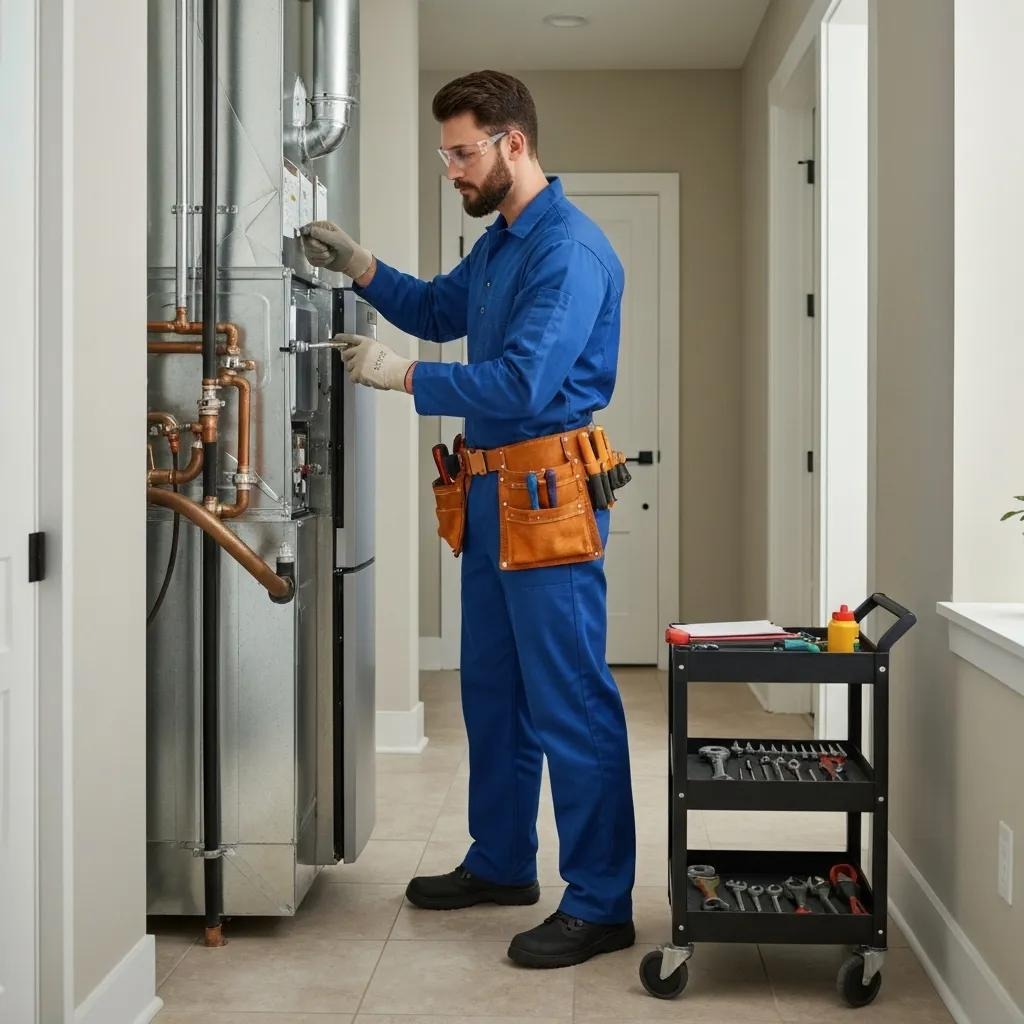
A professional furnace tune-up typically combines safety inspections, component cleaning, calibration, and system performance verification to restore efficient operation and reduce failure risk. Technicians inspect combustion components and heat exchanger integrity, clean burners, test safety controls and carbon monoxide, check and lubricate moving parts, verify blower motor performance, and calibrate the thermostat for accurate control. The table below compares common tune-up tasks to the technician checks and the homeowner benefits they deliver.
The following table summarizes typical tune-up items, what is inspected or serviced, and why it matters for the homeowner:
After these checks, the technician will typically run the system to confirm steady operation and provide notes on any observed wear or parts needing future attention. If you need help scheduling a professional tune-up, Fogg HVAC, Inc. offers scheduled service and plan options and can be reached at (919) 567-0653 to arrange inspections, repairs, or installations.
How Do Gas and Electric Furnace Maintenance Differ for Durham Homeowners?
Gas and electric furnaces share core maintenance goals—safe operation, proper airflow, and efficient heat delivery—but they differ in task emphasis: gas systems require combustion, gas-line, and carbon monoxide checks, while electric systems focus on electrical connections, heating elements, and motor health. The difference in components leads to distinct inspection steps and safety priorities; for instance, heat exchanger inspection is critical for gas units, while element integrity and connection tightness are primary for electric furnaces. The table below breaks down key tasks and why they matter to Durham homeowners choosing the right maintenance approach.
What Specific Maintenance Steps Are Needed for Gas Furnaces?
Gas furnace maintenance centers on safe combustion and venting: technicians perform combustion analysis, inspect the heat exchanger for cracks, verify pilot or ignition systems, and test gas-line pressure and safety controls. Carbon monoxide testing and vent/flue inspections are essential because improper combustion or venting poses immediate health risks. These tasks require licensed technicians due to the safety implications of gas handling and combustion diagnostics. For Durham homeowners, ensuring these checks are part of an annual tune-up reduces CO risk and maintains reliable heat output during winter.
Because gas-related tasks pose safety stakes beyond DIY scope, homeowners should arrange professional inspections rather than attempting combustion-related adjustments themselves.
How Is Electric Furnace Maintenance Different and What Should You Know?
Electric furnace care emphasizes electrical safety and heating element condition: technicians check terminal tightness, inspect heating elements for signs of wear, and verify that contactors and relays operate cleanly. Blower motor inspection and lubrication remain important for maintaining airflow and efficiency, and electrical measurements ensure circuits operate within safe parameters. While electric furnaces avoid combustion hazards, electrical faults can still cause outages or fire risk, so licensed service is recommended for any wiring or element issues. Homeowners should understand that timely electrical inspections prevent sudden failures and help plan piecewise replacements if elements begin to degrade.
Routine electrical-focused maintenance preserves heating reliability in homes with electric systems and complements the seasonal checks described earlier.
What Are the Most Asked Questions About Furnace Maintenance in Durham?
Homeowners commonly ask about maintenance frequency, expected savings, and safety practices; concise answers help residents plan effective upkeep and manage expectations for energy and comfort outcomes. This FAQ section provides direct, PAA-optimized responses that address scheduling, savings potential, and safety preparation for carbon monoxide risks. The following H3 subsections deliver short, practical guidance on how often to schedule professional service and realistic energy savings from regular maintenance.
How Often Should I Schedule Furnace Maintenance in Durham?
The recommended cadence is an annual professional tune-up—ideally in early fall—paired with regular DIY checks such as monthly filter inspection and quarterly filter replacement for typical households. Annual professional service includes combustion and safety tests that homeowners should not skip, while filter changes and vent cleaning can be performed more frequently based on household occupancy, pets, and indoor air quality needs. Scheduling a tune-up before the heating season ensures reliable operation when temperatures drop and reduces the odds of emergency calls. Staggering DIY tasks with a yearly professional inspection strikes a good balance between cost and system longevity.
This schedule helps align maintenance with Durham’s seasonal patterns and ensures systems are ready before heavy use begins.
Can Regular Furnace Maintenance Lower My Energy Bills?
Yes—when done properly, regular maintenance often improves system efficiency by restoring unobstructed airflow and optimizing combustion, which commonly yields measurable reductions in energy use. Industry guidance typically cites efficiency improvements in a noticeable range when filters, burners, and blowers are clean and thermostats are calibrated; real-world savings depend on system age, insulation, and usage patterns. Maintenance reduces run time and heat loss, which directly lowers utility consumption across the heating season. Homeowners should treat maintenance as an investment that both improves comfort and reduces long-term operating costs.
Tracking energy use before and after tune-ups provides the clearest indicator of the financial benefit, and combining maintenance with smart thermostat strategies can further increase savings.
For reliable service in Durham and surrounding areas, or to enroll in maintenance coverage like the Fogg Advantage Plan, call Fogg HVAC, Inc. at (919) 567-0653. Fogg HVAC provides 24/7 emergency service, priority scheduling for plan members, and maintenance expertise to keep your system safe and efficient with dependable local support.
Customer Testimonial
Discover genuine feedback from homeowners who rely on us for reliable service and lasting results.


.png)
.png)
.png)
.png)
.png)
.png)
.png)
.png)
.png)
