






Identifying Hidden Gas Pipe Leaks Before Firing Up Your Furnace for the First Time
The Hidden Risks of the First Fall Furnace Start-Up
Here at Fogg HVAC Inc., we know the arrival of the September pre-heating season means it is time to focus on identifying hidden gas pipe leaks before firing up your furnace for the first time. Throughout the long, hot summer months, your heating equipment has been sitting completely dormant in the background. While you were relying on your air conditioner to battle the relentless heat, the seals, valves, and threaded connections inside your furnace were quietly enduring months of inactivity. Preparing for the first freeze requires much more than simply walking over to your thermostat and switching the system from cooling to heating. A proper pre-season check ensures the safety of your home through honest diagnostics, rather than using an older piece of equipment as a convenient excuse for an immediate, forced upsell.
For comprehensive furnace services, scheduling a routine pre-season check is the best way to protect your home and your family.
In our experience serving this community, most homeowners in Apex NC do not realize how much stress a furnace undergoes simply by sitting unused. When a gas furnace is actively running during the winter, the steady flow of natural gas and the regular cycling of the internal valves keep the seals lubricated and the mechanical components engaged. However, once the system is shut down for the spring and summer, those same components dry out, settle, and become vulnerable to the environmental changes happening around them. This prolonged period of dormancy is when the majority of micro-leaks develop, creating a hidden risk that remains entirely undetected until the system is pressurized again in the fall.
The unseen danger: Natural gas leaks do not always announce themselves with a massive hiss or an overwhelming odor. Often, they start as microscopic breaches in the threading or the union joints of your gas piping. When you finally turn the furnace on for that first chilly evening, the sudden surge of gas pressure can force these weakened seals to give way, turning a minor degradation into a serious safety hazard inside your utility closet or basement.
How Summer Dormancy Compromises Furnace Gas Lines
To understand why dormant systems are so susceptible to leaks, we have to look at the environmental factors at play inside your home. Our technicians frequently see how the transition from hot, humid Apex NC summers to chilly fall weather causes continuous thermal cycling. As temperatures rise and fall, the metal components of your gas piping—including black iron pipes, brass shut-off valves, and corrugated stainless steel flexible connectors—naturally expand and contract.
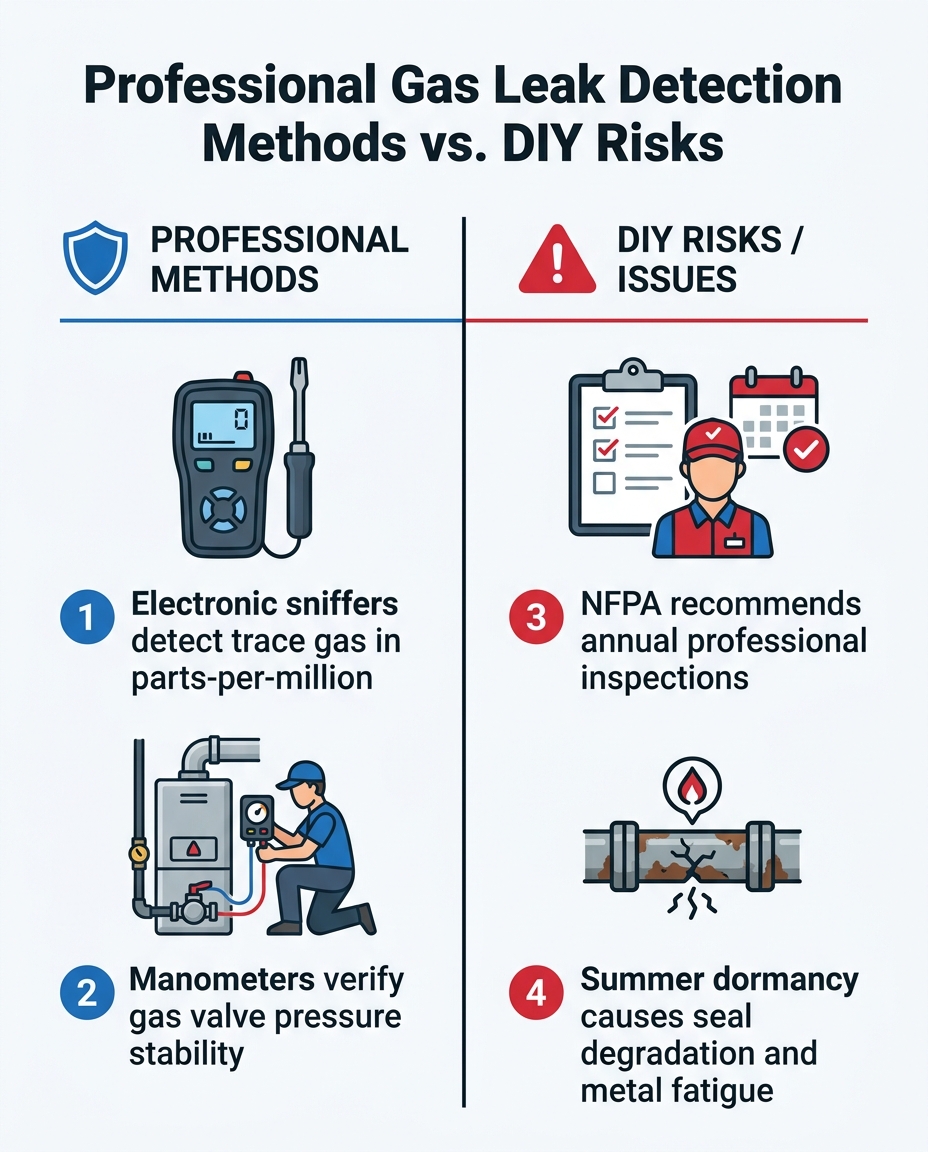
Over a period of several months, this microscopic movement stresses the unions and joints. When the system is running daily, the consistent internal pressure and ambient heat of the furnace help maintain the integrity of the pipe dope and Teflon tape used to seal the threads. But during the summer, the lack of use allows these sealing materials to dry out, harden, and occasionally crack as the metal shifts around them.
• Active (Winter) — Environmental Impact on Gas Lines: Consistent internal pressure and localized warmth keep seals pliable and engaged. — Risk of Leak Development: Low. Constant cycling prevents settling and drying out.
• Dormant (Summer) — Environmental Impact on Gas Lines: High humidity and temperature swings cause metal expansion, contraction, and seal drying. — Risk of Leak Development: High. Hardened pipe dope and shifted joints create micro-fissures.
• First Fall Start-Up — Environmental Impact on Gas Lines: Sudden introduction of gas pressure hits weakened, dried-out seals all at once. — Risk of Leak Development: Critical. Micro-fissures can immediately expand into active gas leaks.
These micro-leaks are incredibly deceptive. Because the gas valve is shut off or the system is completely inactive, there is no active gas flow to push through the compromised seals during July or August. The integrity of the connection has failed, but the evidence of that failure remains hidden. It is only when the gas supply is fully engaged and the system is called upon to heat the home that the pressurized natural gas finds the path of least resistance through the dried-out pipe dope or weakened flexible connector.
The impact of humidity: In regions with significant summer moisture, the external oxidation of older iron pipes can also play a role. While the pipes themselves are thick and durable, the threading where two pipes meet is thinner and more vulnerable to environmental degradation. A comprehensive pre-season inspection looks for these exact signs of stress, ensuring that the physical connections are as secure as the day they were installed.
Beyond the Smell: Professional Leak Detection Methodology
When our team is out diagnosing common furnace issues, we always remind homeowners that relying solely on your nose is never enough. Natural gas is naturally odorless and colorless. Utility companies add a chemical called mercaptan to the gas supply, which gives it that distinct "rotten egg" or sulfur smell. While this is an excellent warning system for major, catastrophic leaks, it is highly ineffective for detecting the micro-leaks that commonly plague older, dormant furnaces.
By the time a human nose can detect mercaptan in the air, the concentration of gas is already significantly higher than it should be. Furthermore, if your furnace is located in an unconditioned crawlspace, a ventilated attic, or a drafty basement, the ambient airflow can easily carry the odor away before it ever reaches the living areas of your home. This is why our professional leak detection methodology moves far beyond the basic DIY "soapy water" tests and relies on highly sensitive diagnostic equipment.
Electronic Combustible Gas Sniffers
Our first line of defense during a September pre-heating season safety check is the electronic combustible gas sniffer. These specialized, calibrated devices are designed to detect trace amounts of combustible gases at the parts-per-million (PPM) level—long before the human nose could ever register a smell.
1. Targeted scanning: The technician slowly runs the wand of the sniffer along every inch of the flexible gas connector, paying special attention to the corrugated ridges where microscopic cracks often hide.
2. Joint verification: Every hard pipe joint, elbow, union, and shut-off valve is individually scanned. The sniffer will trigger an audible and visual alarm if even a microscopic amount of gas is escaping through the threads.
3. Valve housing checks: The exterior of the furnace's internal gas valve is scanned to ensure the casing itself has not developed a hairline fracture over the summer.
Manometer Pressure Testing
While the sniffer finds gas escaping into the air, a manometer pressure test verifies the internal integrity of the gas valve itself. A manometer is a highly sensitive gauge that measures the exact gas pressure entering the valve (inlet pressure) and exiting the valve to the burners (manifold pressure).
Why this matters: A common issue our technicians spot with dormant older furnaces is a gas valve that fails to shut off completely when the heating cycle ends. If the internal diaphragm of the valve has dried out over the summer, it may allow a tiny trickle of gas to continue seeping into the combustion chamber even when the furnace is off. By hooking up a manometer, a professional can watch the pressure readings. If the pressure drops when the valve is supposed to be closed, it confirms an internal leak that an external sniffer might miss. This dual-layered methodology is what separates a rigorous professional safety check from a basic, visual once-over.

Targeted Solutions: Resolving Gas Piping Leaks on Older Systems
Discovering a gas leak during a pre-season check can be an alarming moment for any homeowner. However, finding a leak on the gas piping of an older furnace does not automatically condemn the entire heating system. When you work with experienced professionals providing residential heating services, the goal is always to address the specific failure point safely and effectively.
For example, during a recent fall service call here in Apex, our team helped a homeowner dealing with a furnace gas piping leak that had developed over the long summer downtime. The system itself was older, but the core heating components were still functioning safely. Our technician immediately isolated the gas supply to remove the danger. Instead of condemning the entire furnace, they removed the compromised piping, cleaned the connection points, and installed a secure, freshly sealed replacement pipe. The leak was completely resolved efficiently, and the home had safe, reliable heat for the upcoming winter.
The professional repair process: Resolving a gas piping leak requires strict adherence to safety protocols. When Fogg HVAC Inc. handles a repair, the main gas supply to the appliance is first shut off and locked out. The technician then uses specialized pipe wrenches to carefully back out the compromised section of black iron pipe or flexible connector. The old, hardened pipe dope or Teflon tape is meticulously wire-brushed away from the internal threads of the remaining connections.
Once the threads are completely clean, the technician applies a fresh coat of gas-rated, high-density thread sealant. The new piping is threaded into place and torqued to the exact specifications required to create a permanent, airtight seal. Finally, the gas is turned back on, and the entire assembly is re-tested with both a combustible gas sniffer and a liquid leak detector solution to guarantee the repair is flawless. The outcome is a fully resolved safety issue that allows you to continue using your existing system with absolute confidence.
The Ethics of Diagnostics: Prioritizing Honest Repairs
One of the biggest fears homeowners face when calling a technician for a safety check is the dread of the high-pressure sales pitch. There is a common, unfortunate pattern in the home service industry where a minor issue on an older system is heavily leveraged to frighten the homeowner into buying brand-new equipment. This is where our commitment to honest diagnostics and repairs truly sets our Apex heating professionals apart.
The ethical dilemma a technician faces when diagnosing an aging system is significant. If a gas pipe is leaking, the situation is undeniably dangerous and must be addressed immediately. However, if the heat exchanger is intact, the blower motor is pulling proper amperage, and the safety limit switches are functioning correctly, the furnace itself is still viable. An honest technician will clearly separate the failing component (the gas pipe) from the healthy equipment (the furnace).
• Clear communication: We explain exactly where the leak is, why it happened, and what is required to fix that specific connection.
• Targeted repairs: If a basic length of replacement pipe and an hour of labor will make the system 100% safe, that is the recommendation our team makes.
• No forced upsells: We never use the genuine danger of a gas leak as emotional leverage to push an unnecessary system replacement.
Prioritizing safety means fixing the immediate danger. If your older furnace is nearing the end of its lifespan, we will certainly provide you with the information you need to plan for the future. But that conversation is always secondary to resolving the active gas leak and restoring the safety of your home. You deserve to make major financial decisions on your own timeline, not under the duress of a manufactured emergency.
Why Gas Line Inspections Require Licensed Professionals
With the rise of online video tutorials, many homeowners are tempted to tackle household repairs themselves to save time. At Fogg HVAC Inc., we must state this as clearly as possible: gas line leak detection and repair is strictly licensed professional work. It is never a weekend DIY project. The risks associated with handling combustible natural gas are simply too high to leave to guesswork.
The National Fire Protection Association (NFPA) strongly recommends annual professional inspections of all fuel-burning heating equipment before the heating season begins. This recommendation exists because the margin for error when dealing with natural gas is zero. A poorly executed repair does not just result in a furnace that won't turn on; it can result in a catastrophic fire or explosion.
The dangers of DIY gas repair:
• Using the wrong materials: Standard white plumbing Teflon tape is designed for water lines, not gas. Gas lines require a specific, high-density yellow Teflon tape or specialized gas-rated pipe dope. Using the wrong sealant guarantees a future leak.
• Over-tightening: Black iron pipe can crack if over-torqued, while the brass fittings on shut-off valves can easily warp. A licensed professional knows exactly how much torque is required to seat the threads without damaging the metal.
• Failing to pressure test: A DIYer tightening a pipe with a wrench has no way to verify if the internal gas valve is holding pressure or if the new threads are micro-leaking.
When you hire a licensed professional for your September pre-heating season check, you are paying for their training, their specialized diagnostic tools, and their liability. A professional assumes the responsibility for the repair and guarantees the safety of the connection, giving you total peace of mind before the cold weather sets in.
Schedule Your Pre-Season Furnace Safety Inspection
As the long summer finally gives way to cooler temperatures, now is the time to ensure your heating system is truly ready for the work ahead. The September pre-heating season is the ideal window to verify that your older furnace is safe to operate, long before the first freezing night forces your system to run continuously.
Remember that a trustworthy technician will perform rigorous, highly technical safety checks on your dormant gas lines without using their findings to force an unnecessary upsell. By scheduling a professional inspection with Fogg HVAC Inc. today, you ensure that any hidden micro-leaks are detected and expertly repaired. Protect your home, prioritize your family's safety, and book your routine pre-season check so you can turn on your heat this fall with complete confidence.
Customer Testimonial
Discover genuine feedback from homeowners who rely on us for reliable service and lasting results.


.png)
.png)
.png)
.png)
.png)
.png)
.png)
.png)
.png)
